Sword ferns provide valuable ecosystem benefits, holding soil in place to prevent erosion and invasive plant growth. They also provide a habitat for forest birds such as the Pacific wren, and a food source for wildlife, such as mountain beavers. And in Seattle’s Seward Park, they are dying off at alarming rates.
Nobody really knows why, but Program on the Environment lecturer Tim Billo and Seward Park steward Paul Shannon have some ideas, which they shared with King 5 News reporter Alison Morrow last Friday. Check out the video.
Paul Shannon (2011), Jordan Jackson (2017).
Sword ferns flourish in Seward Park, in the 2011 photo on the left. The same area is almost devoid of ferns in the 2017 photo to the right.
According to Tim, sword ferns are just not regenerating. He’s been monitoring the decrease of ferns in Seward Park for the past two years to measure the rate at which ferns are dying, and to identify any known causes. Paul Shannon has noticed the decrease of ferns in the area for even longer and predicts all the ferns in the park could be gone in 10 years. There are concerns about the reverberating impacts of this unnatural phenomena, which may have implications in other parts of the region.
With Tim as his faculty advisor, Environmental Studies student and recent graduate Justin Beach investigated the fern die-off phenomenon as part of his Capstone project, and tested the effects of native mountain beavers on the ferns. Beavers are unlikely the cause of the die-off and are at risk if this primary food source is less available to them. There may be an as of yet unknown pathogen that is preying on the swordfern. Continued research is needed to save the ferns. Read more about Tim’s research on the sword fern die-off in one of Seattle’s beloved parks.
Teaching, studying and modeling sustainability in action is a hallmark of the Program on the Environment.
This year, the Program is thrilled to congratulate three superstars who are leading change for a more just and sustainable world, through environmental student club leadership, environmental justice capstone work and creative teaching methods.
The 2017 Husky Green Awards winners, honored on April 20 at UW Sustainability‘s Earth Day festival include Environmental Studies majors Cassie Maylor, Shelby Cramer and Program on the Environment (POE) lecturer Kristi Straus. Another winner from the College of the Environment was Judy Twedt, graduate student in Atmospheric Sciences, who founded a Climate Change Speaker’s Bureau to engage with labor unions. Judy is also a Teaching Assistant for POE lecturer Beth Wheat’s class Attaining a Sustainable Society.
The awards are in their eighth year of recognizing leaders on the UW campus who demonstrate their dedication to the environment.
UW Sustainability
Shelby, Cassie and Kristi with their Husky Green awards.
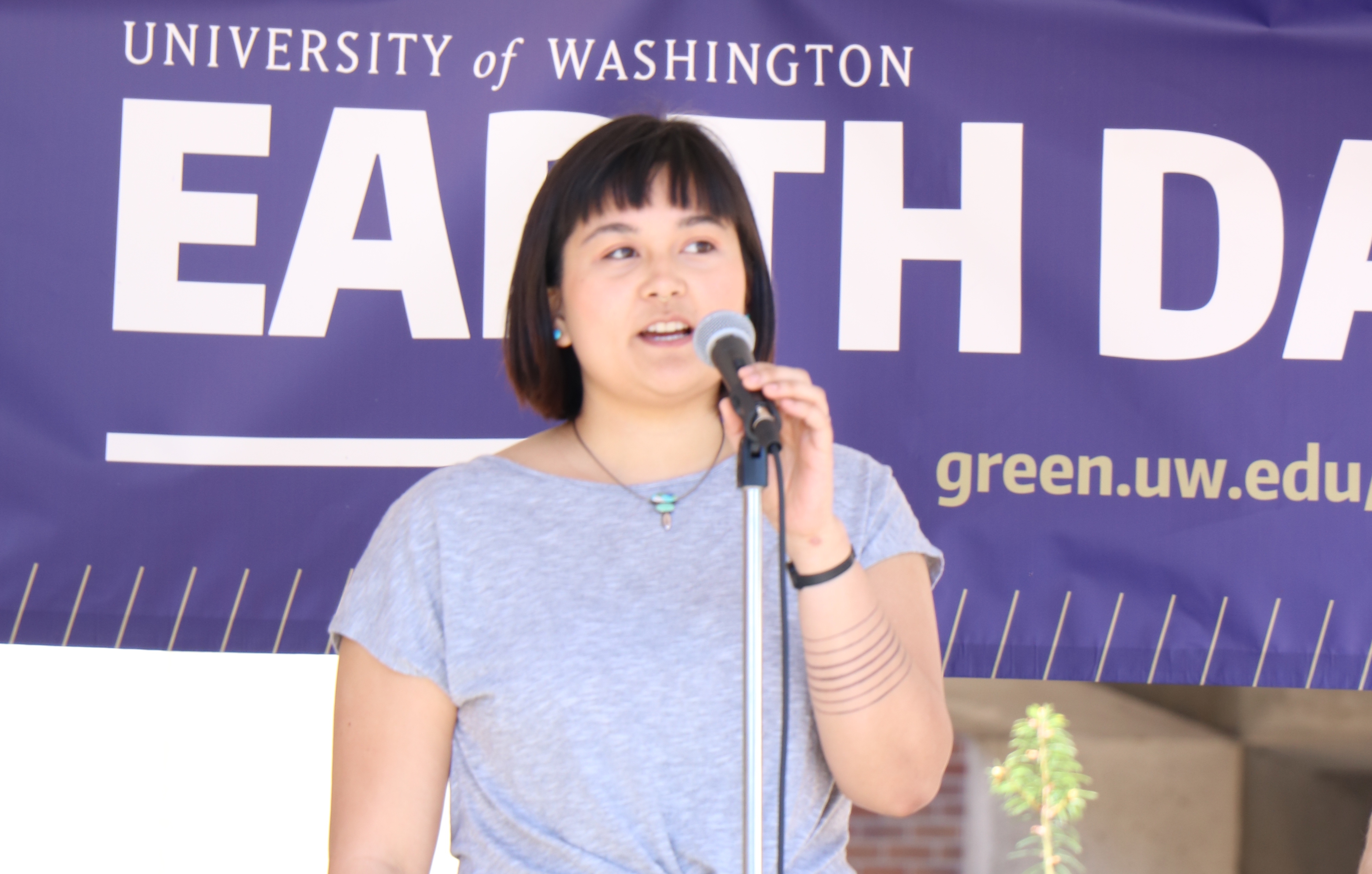
Cassie is co-president of SAGE (the Student Association for Green Environments), and co-organizes activities and events such as Art to Inspire, which was a group effort to gather the UW community to celebrate art as a vehicle for raising environmental awareness. Cassie is interested how companies can lessen their impact on the planet, and is the vice president of operations of ReThink UW, a student group centered on business sustainability. She’s also a student assistant for the UW Buerk Center for Entrepreneurship where she helps coordinate events and outreach.
Cassie Maylor
“I’m grateful to have so many opportunities in Seattle to practice, research, communicate, create, and share what sustainability is and can be. The Husky Green Award has been a wonderful reminder to work harder, reach more people, and not be afraid to share the true environmental geek that I am. Don’t forget, that the “out there” is right here, and can start with you.”
“A lot of us in the dynamic and broad field of the environment struggle with just wanting to save the world. I find that as I get closer to fully aligning my values with my beliefs and actions, I get closer to knowing that I can achieve the change I want.” – Cassie Maylor
Don’t forget, that the “out there” is right here, and can start with you.” -Cassie Maylor
Shelby also played a key role in the Art to Inspire event as an officer of SAGE. She is interested in how communication can be a valuable tool to guide sustainable decision-making at the community level. Her capstone project with the EPA examines how organizations are engaging with the community around the Duwamish SuperFund site and how that outreach impacts the community’s actions. She’ll couple these insights with research on how effective communication can benefit outreach efforts.
UW Sustainability
Shelby Cramer
As a UW Environment undergraduate student ambassador, Shelby is available to connect with prospective students and as a student student assistant for the College of the Environment, she links students to resources and professional opportunities.
“I am grateful for the time UW Sustainability takes to recognize efforts made by individuals and groups for greener, more sustainable environments, and I am constantly proud and heartened by the many Program on the Environment students, staff, and faculty who are devoted to that effort.”
We don’t just study the environment here; we connect to it and foster its welfare.” -Shelby Cramer
UW Sustainability
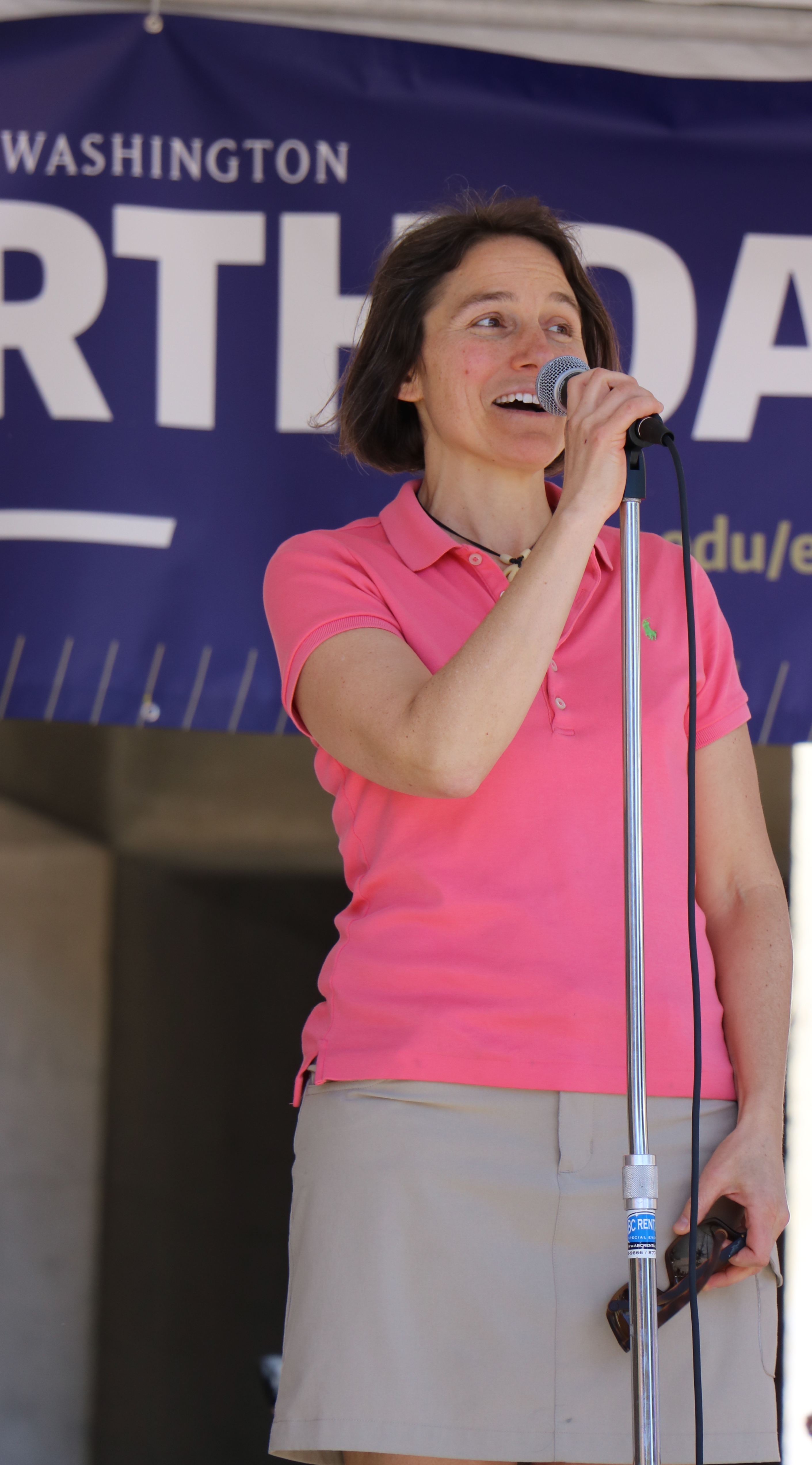
Kristi Straus
Kristi recently received the Distinguished Teaching Award for her efforts to empower students to take ownership of their personal impact on the world. She teaches sustainability and environmental courses at the Program on the Environment and is launching a new flipped classroom study abroad experience through her sustainability course in partnership with Tsinghua University in China. Read more about Kristi’s philosophy and teaching path on the Whole U Faculty Friday feature.
“I think that the students in my sustainability course all “lead change for a sustainable future.” That class is SO inspiring to me – every quarter that I teach it, the students give so much of themselves, thinking so deeply, really working hard to see the way our society is structured around consumption.”
By working to reduce our individual impacts around waste, and food, by thinking deeply about consumption and happiness, we are all the beginning of a much bigger change.-Kristi Straus
Congratulations to Environmental Studies student, Kristen Smith, one of UW’s 2017 Husky100!
The Husky100 recognizes outstanding students on all three University of Washington campuses who are making the most of their time in college and exhibiting leadership, passion and drive. As interim provost and executive director Jerry Baldasty notes, this honor is reflective of the caliber and spirit of a student body that “gain the skills they need to prepare for rewarding careers in industry, community and life.”
Kristen has a passion for environmental education and fostering environmental stewardship in young students.
For her Environmental Studies Capstone, Kristen worked with Seattle Tilth to find ways to support environmental educators so they could in turn help autistic students succeed in their programs. She worked in Seattle Tilth’s Children’s Garden as an instructor and observed and documented teaching practices that worked for students with autism.
The Husky 100 students will be recognized at a special event on April 10.
Encouraging students to examine their personal impact on the environment by carrying their waste for a week is just one way Program on the Environment lecturer Kristi Straus pushes the envelope when it comes to teaching students about sustainability.
Kristi
Kristi Straus
To honor her dedication to engaging students with innovative teaching curriculum and methods, Kristi has been awarded the Center for Teaching and Learning Distinguished Teaching Award, one of the highest recognitions at the University.
Recipients of the award display extensive knowledge and mastery of the subject matter and guide students through independent and creative thinking. At the Program on the Environment (POE), we can attest to Kristi’s capacity for collaboration and her propensity to get all of us pumped up about education.
Congratulations, Kristi!
Kristi is deeply invested in sustainability education and wants her students to understand how the choices they make in their own lives matter in the world around them. She is committed to making education accessible and fun, and is a MESA instructor in her spare time. She is also passionate about mentoring teaching assistants to develop their skills as educators.
Recipients will be honored in a public ceremony in June 2017. Stay tuned for more details from the Center for Teaching and Learning.
I feel so grateful to be a POE lecturer. I have the freedom to be creative, to try new things in the classroom, to share so much of myself with my students, to focus on what I find inspiring. I love the connections I make with students, faculty and staff.
To find so much joy in my work is the real prize. To be honored in this way is a wonderful surprise, and feels like icing on the cake. –Kristi
As one of the Program on the Environment’s core faculty, Kristi teaches a variety of courses, including introductory environmental studies and analysis courses to the ever popular Sustainability: Personal Choices, Broad Impacts which heightens students’ awareness of the impacts of their consumption.
As part of her leadership with the UW Center for Teaching and Learning Initiative, Kristi is launching an exciting new flipped classroom study abroad experience through her Sustainability course, in partnership with Tsinghua University in China. Applications are still being accepted for this opportunity to bridge learning on sustainability education on a global scale.
Today, the UW’s Livable City Year program published its first reports from a year-long partnership with the City of Auburn. Reports represent a diverse range of applied learning projects students and faculty implemented to address the City of Auburn’s sustainability challenges.
The Livable City Year program (LCY) is a new initiative led by UW faculty directors Branden Born (Urban Design and Planning) and Jennifer Otten (Public Health) in collaboration with UW Sustainability, Urban at UW and the Association of Washington Cities. The program connects local governments with talented students and faculty at University of Washington to work together on critical projects. LCY partners on sustainability and livability goals by engaging students and classes across the university.
The teams working on the projects included students in Public Health, Built Environment, Environmental Studies, Sociology and more. Read the individual project reports which cover cultural city mapping, community place-making, responsible purchasing, homelessness and affordable housing.
Be sure to check out the summary report on Auburn’s Buy Local project, written by Environmental Studies student Sungkun Choi, as part of our program’s Sustainability Studio course. In the course (last quarter’s topic was on socially responsible and equitable purchasing), students developed a website and mobile app to gather information about local businesses and help promote local products and services to a wider consumer base.
The Buy Local project was created in response to a loss of sales tax revenue, and as a way to stimulate the local economy of Auburn.
The first LCY projects were considered a success and forged connections between the UW and City of Auburn communities. Auburn mayor Nancy Backus said the program “helped us make major strides forward in areas that are critical to the health, safety and happiness of our residents.” Read the full announcement.
What it’s like to spend 9 days in PNW backcountry: ‘A reset for the human spirit’
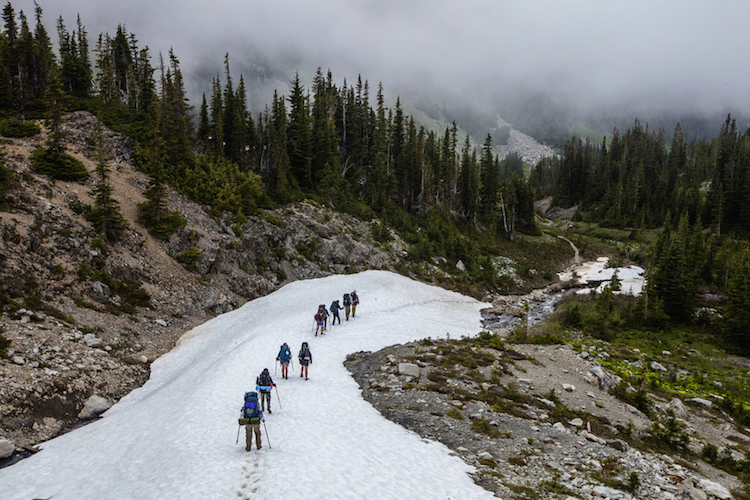
The Seattle Times environmental reporter, Lynda Mapes, joined Environmental Studies instructor Tim Billo and 10 students during an intensive 9-day backpacking excursion into the Olympic National Park this summer, part of Tim’s class: Landscape Change in the Pacific Northwest.
This challenging class immerses students in nature, where they reflect on the importance of wilderness, discover their own strengths living in the wild, and learn about the unique species in the Olympics.
Steve Ringman/The Seattle Times
Environmental Studies students from the University of Washington and instructor Tim Billo make their way down into Grand Valley toward the end of their trek in the Olympic National Park backcountry.
Being so close to nature reminded student Emi Schwartz how small humans are in this vast world and how therapeutic it is to reside in the wild and escape technology and daily stresses, even if for a few days:
“A 400-year-old Douglas Fir is a reset for the human spirit.” – Emi Schwartz, senior in Environmental Studies
The Environmental Studies team is delighted to welcome Rick Keil, professor of chemical oceanography, to lead the program for the next three years.
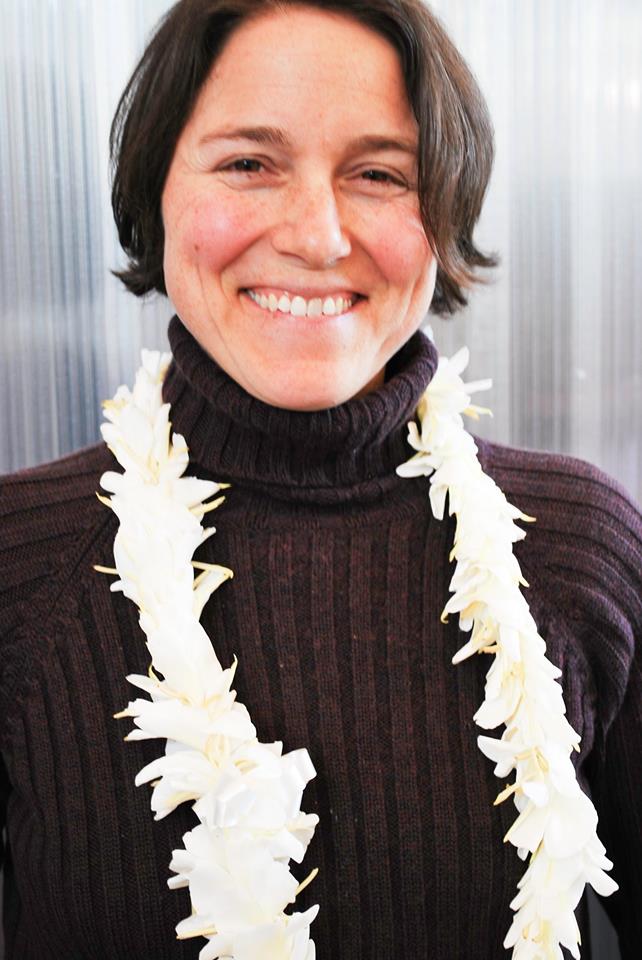
Rick brings to the directorship a diverse background of university service including stints as associate director of oceanography and as chair of the UW’s faculty sub-council on academic programs. His research focuses on a changing ocean with specific emphases on low oxygen environments (oceanic ‘dead zones’) and on the changes humans impart upon the ocean’s carbon cycle. Rick’s lab group also studies ocean pollution, focusing on the chemical contaminants associated with plastic. Rick teaches a variety of courses ranging from introductory oceanography to ocean pollution.
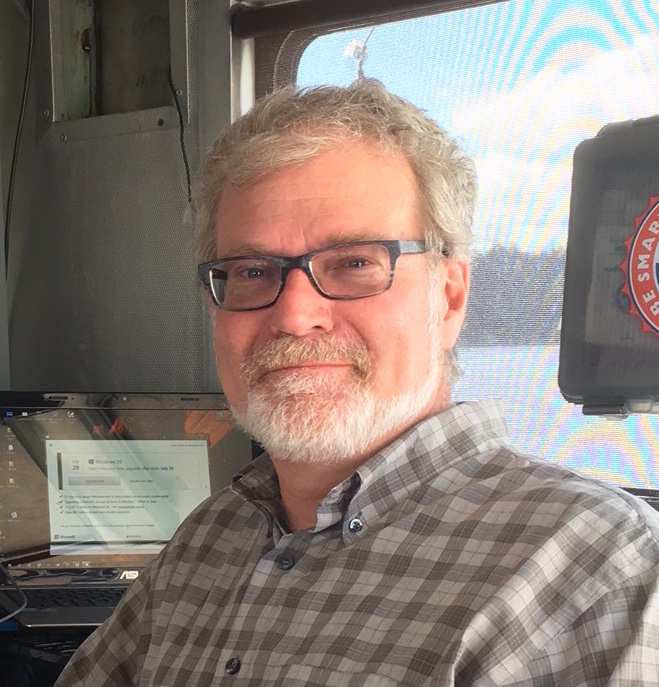
Rick Keil
One of his goals as director of the Program on the Environment is to foster community between people studying and working in the humanities, and sciences.
“Now, more than ever, the world needs well educated people making a positive difference at the interface of the arts, sciences and humanities.I think the Program on the Environment plays an important role in shaping this component of the university’s mission, and I look forward to collaborating broadly across campus to bring the humanities and the natural and social sciences closer together.”
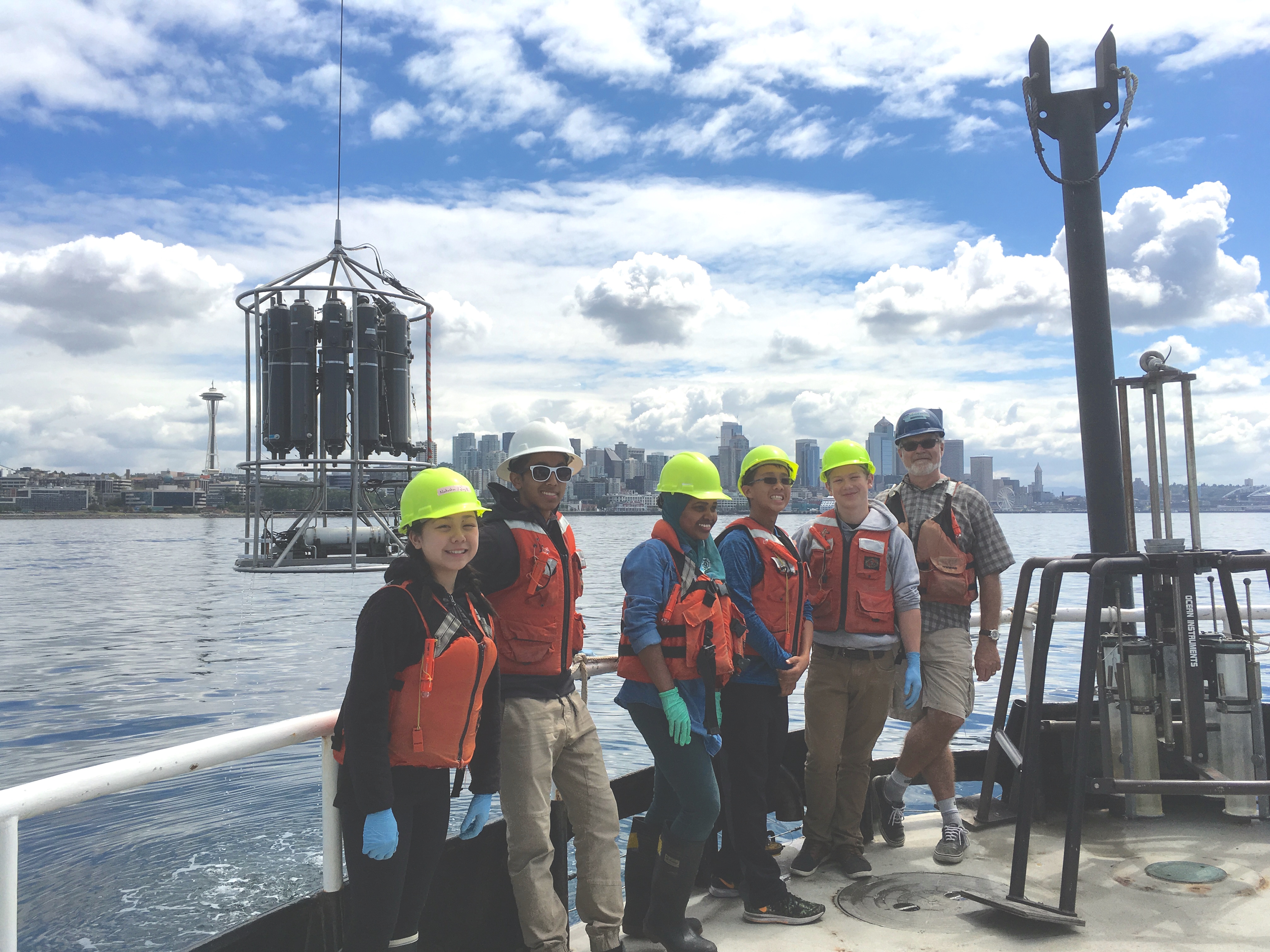
Rick Keil with high school students in his Ocean Intern program.
Rick is passionate about promoting excellence and innovation in student learning. He started Ocean Intern, a paid internship program that takes 10 high school students on a research vessel for a four weeks. Students work with Rick to explore the waters of the Puget Sound and conduct ocean science experiments.
Sound Citizen, another project Rick started with Washington Sea Grant sends Puget Sound residents to collect water samples across the region that are tested for chemicals. The collected data helps raise awareness about the link between chemicals in the water and the effect on human health.
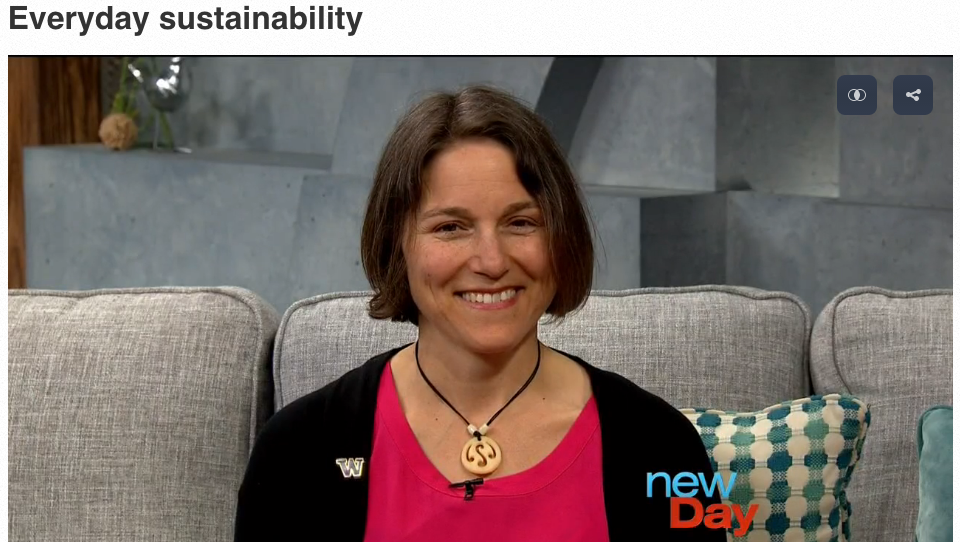
Kristi Straus, Ph.D, a lecturer for Environmental Studies at the College of Environment, University of Washington, teaches about sustainability and practices it in her daily life; today she spoke on King 5’s New Day Northwest about ways that everyone can weave sustainability into their lifestyle.
Watch the New Day segment and learn some of Dr. Straus’s tips on everyday actions citizens can consider to lessen their environmental impact.
Practicing sustainability, in the classroom and beyond
In her Environmental Studies (ENVIR 239) class Sustainability: Personal Choices, Broad Impacts, Dr. Straus breaks down what sustainability means and why it is important, and sets up a series of sustainability activities so students can experience their own personal impact. For example students learn about the American waste system and carry their trash for a week, as well as reflect on their food consumption, designing their rules for one week of sustainable eating. The goal is for students to understand how their way of life will impact future generations.
One student was so inspired by the class she took it upon herself to experiment with a zero-waste lifestyle and continues to find ways to embrace sustainability, through her food consumption, and purchasing habits.
The Environmental Studies Capstone Symposium is tomorrow! Read about how students Phoebe Reid and Mallory Culbertson brought their skills and passion to address employee satisfaction at the EPA and analyze the role of chickens in agriculture and the modern food system in a UW news story by Michelle Ma.
The Capstone Course Series is a rigorous three-quarter experience which equips students to tie in academic research with practical application via professional internships at organizations such as the EPA, UW Farm, Washington Environmental Council, Puget SoundKeeper Alliance, and UW Sustainability.
Join us tomorrow for public presentations by students, on topics ranging from waste diversion in hospitals, greening sports, engaging millennials in environmental advocacy and legislative action, sustainability indicators in small communities, and more.
Sent on behalf of the Search Committee for the Director of the Program on the Environment
Dear College faculty, staff, students, and PoE Advisory Board Members,
You are invited to attend the open presentations and Q&A sessions with the three finalists for the next Director of the Program on the Environment. All will take place in Wallace Hall (ACC). The finalists will provide a 20 – 30 minute candidate statement to address their vision for the program, how they will approach accomplishing this vision, and a summary of their qualifications, with the remaining 45-55 minutes dedicated to a question and answer session.
The finalists and the information about their public sessions are below:
Prof. Rick Keil (School of Oceanography) Friday, May 20th, from 12:30 – 1:45 PM, in ACC 120
Prof. Peter Kahn (Dept. of Psychology and School of Environmental and Forest Sciences) Monday, May 23rd, from 12:00 – 1:15 PM, in ACC 012
Prof. Nives Dolsak (School of Marine and Environmental Affairs) Monday, May 23rd, from 2:00 – 3:15 PM, in ACC 012
We look forward to seeing you at these presentations.
Best,
Lisa
—
Lisa J. Graumlich Dean, College of the Environment Virginia and Prentice Bloedel Professor University of Washington Ocean Sciences Building, Suite 200 Seattle, WA 98195-5355 206-221-0908 (Andrea Perkins, Assistant to Dean) environment.washington.edu