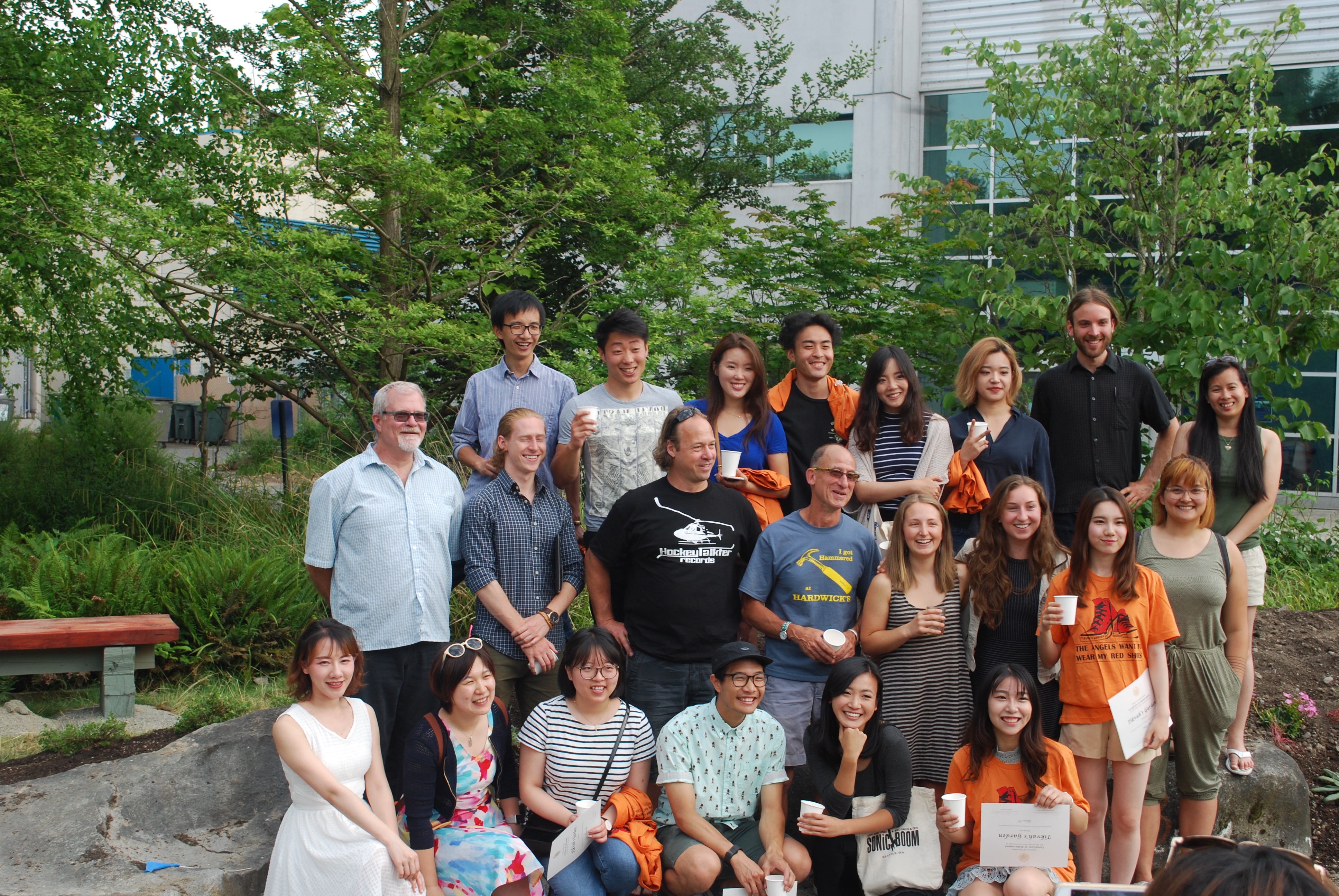
Environmental Studies Capstone winners skillfully cover food security, urban waste design, fishery certification and plant-microbe partnerships.

Last week’s Capstone Symposium presenters did not disappoint. With an array of oral and poster presentations showcasing work with business, campus, nonprofit and government partners on topics ranging from global conservation to implementing sustainable practices in corporations, choosing winners was tough.

Riley Smith, Shruti Parikh, Sydney Barnes-Grant and Lola Behrens with Capstone Instructor Sean Mc Donald.

The results are in though (thanks to faculty and alumni judges), and the winning presenters have bragging rights for life. Congratulations to Riley, Shruti, Sydney and Lola!

The Environmental Studies Capstone highlights students work resulting from a three quarter long course series that encompasses an internship with partner organizations at UW and across Seattle.

Here’s a look at the four winning Capstone projects.

Lola Behrens

Project Title: Cultivating Food Security
Best Poster Presentation

Lola’s Capstone internship with Good Cheers Food Bank & Thrift Stores focused on learning how to mitigate food insecurity. Good Cheers is located on South Whidbey Island and is committed to providing healthy locally sourced food to residents in need. The organization provides resources to sustain healthy eating habits and contribute towards the long-term health outcomes of its community.

Through her research Lola learned that in 2016, 12.3% of households in the United States were food insecure, (these households were unable to obtain enough food to adequately feed every member of the family). She observed and interviewed food bank users, and supplemented her research with a review of relevant literature:

“I found that three important factors (pillars of Good Cheers) in mitigating food insecurity include: the adoption of health-oriented point systems by food banks, the advocacy and facilitation of food sovereignty, and a deliberate effort to develop a sense of community within local food systems.” 

Lola Behren's Capstone poster.
Lola Behren’s Capstone poster.


Sydney Barnes-Grant

Project Title: Optimization of urban waste design
Best Oral Presentation

Sydney worked with the U.S. EPA, Region 10 to address the issue of aquatic trash. During her research, Sydney found that most people take less than two seconds to determine where they dispose of their trash and that land sources are responsible for 80 percent of trash in oceans.
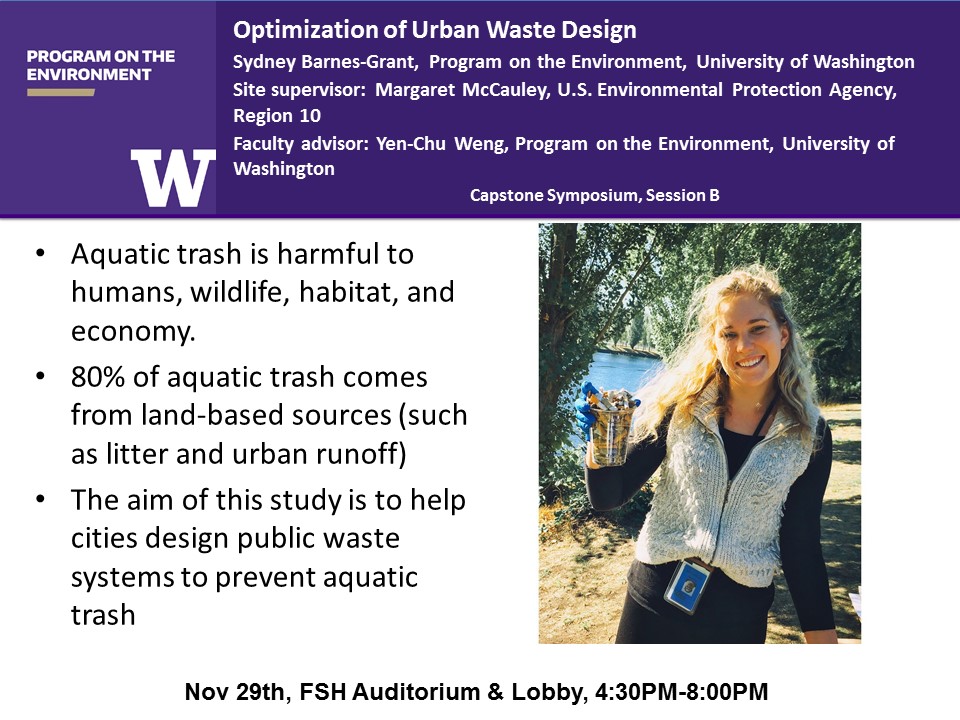
A snapshot of Sydney's Capstone work.
A snapshot of Sydney’s Capstone work.

As part of her internship for the EPA’s Trash Free Waters program, Sydney wanted to build a public waste management tool to deal with land-based trash. She created a protocol based on California’s Urban Rapid Trash Assessment methodology to locate and track urban litter hotspots. Using ArcGIS technology, Sydney mapped litter hotspots in three water adjacent neighborhoods in Seattle, WA.

This type of monitoring can be used to inform city planning to optimize waste receptacle locations, using smarter design and strategic placement near litter hotspots. Sydney will continue her good work with the EPA in ongoing efforts to keep trash out of our waterways.


Riley Smith

Project Title: Greener than thou: Impacts of environmental and social sustainability certification on the Alaska fishery
Honorable Mention Poster Presentation

Riley worked with the Pacific Seafood Processor’s Association to examine the impacts of environmental and social sustainability certification on Alaska fisheries. He researched the effectiveness of eco-labels as marketing tools to ensure equitably grown food, and identified side effects that certifications can have.

Riley found that in fisheries, the leading eco-label is that of the Marine Stewardship Council (MSC), which focuses on fisheries management and environmental sustainability, yet excludes human rights and labor standards for certification. This revealed to him a gap that needed addressing.

“The issues of human rights and sustainability in fisheries is what catalyzed my Capstone research!” stated Riley, who measured the adherence of the Alaska Salmon and Pollock fisheries to the environmental, human rights and labor standards of the Responsible Fishing Scheme. His research and review of governing regulations found third-party certification is often biased towards industrialized, large-scale fisheries and places the burden of cost for certification on the producers.

Riley graduates this quarter and will work as a contract researcher on a grant with the Alaskan Fisheries Development Foundation and NOAA on the topic of socially responsible practices on vessels.
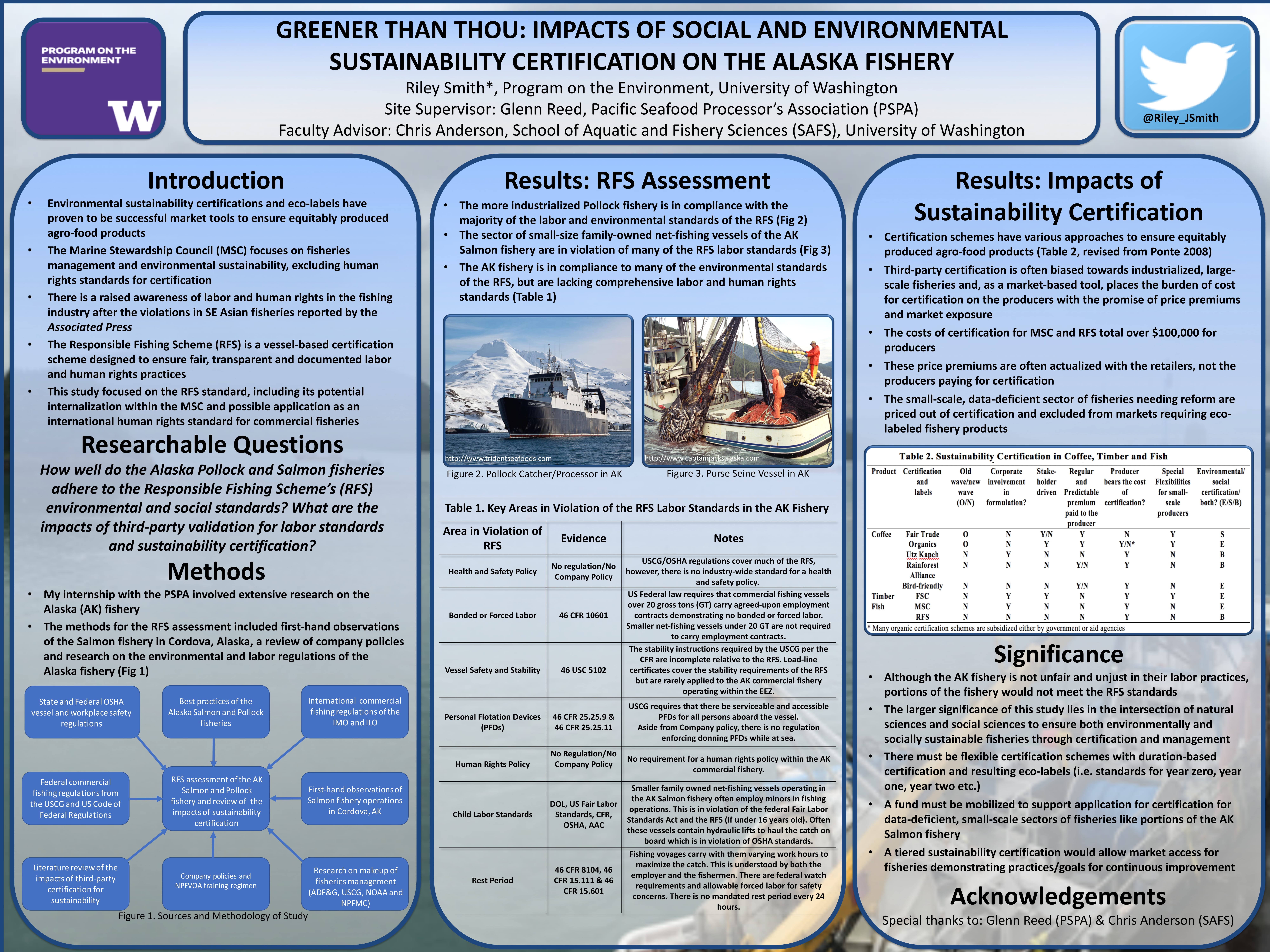
Riley Smith's Capstone poster.
Riley Smith’s Capstone poster.


Shruti Parikh

Project Title: Using plant-microbe partnerships to help salt-impacted crops
Honorable Mention, Oral Presentation

Shruti knows a lot about endophytes (beneficial bacteria that live in plants) and has been working in Sharon Doty’s UW Lab for two years to test the potential of the microbes to reduce plant stress caused by high salinity.

A snapshot of Shruti's Capstone work.
A snapshot of Shruti’s Capstone work.

High salinity is a type of abiotic stress that effects crop productivity and quality. Through her research, Shruti found that in 2010, about half of the world’s cropland was facing salinity stress. There are very few plants that can tolerate high levels of salt however, the Doty Lab looks at endophytes that live within plants as potential allies to help plants tolerate these stressors in a more natural way.

The goal of Shruti’s study was to isolate and test endophytes to determine whether they colonize other plants and help the plants cope with high salinity conditions. She tested the initial stress tolerance of various crop plants, and performed plant studies to demonstrate whether the endophytes improve plant growth. The results showed visible signs of higher stress tolerance in poplar plants inoculated with a certain endophyte, SSP8. Big picture potential: by improving plant growth, these bacteria will help promote sustainable agricultural practices and bioenergy production.

Shruti received a Mary Gates Scholarship earlier this year for her research on using plants to purify air and reduce pollutants such as arsenic. Her research interests continue to expand!
New Sustainable Learning Space celebrates place-based learning and community

Designing an outdoor educational space to honor a former staff member, fulfill students’ Capstone requirements, and meet UW building regulations, all within budget and time constraints, is no small feat.

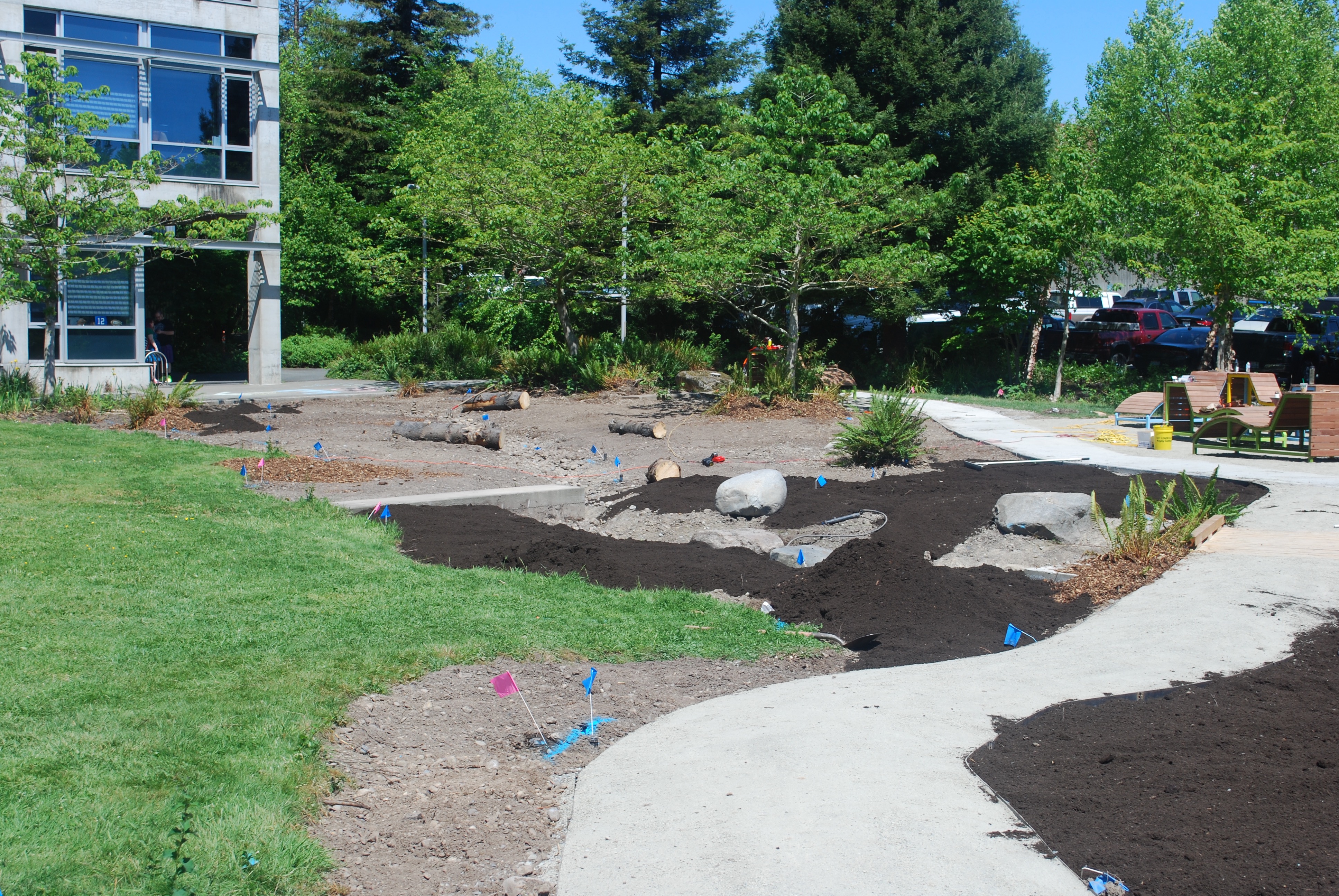
However, this Spring, with the support of a slew of collaborators, a vibrant outdoor learning space, located on the northern side of the School of Aquatic and Fisheries lawn was built. The garden space, adorned with nature-themed quotes, hand-crafted wood benches, native plants, a bioswale and rain garden is the result of a tremendous team effort by students, faculty and staff across campus.

With appreciation and thanks to the Campus Sustainability Fund; UW Landscape Architecture and its annual Design/Build course; UW Department of Urban Design & Planning; UW Department of Facilities Maintenance & Construction, UW’s Office of the University Architect, and the generosity of donors to Tikvah’s Fund, this learning and teaching space is open to all on UW campus, to gather, study and learn.

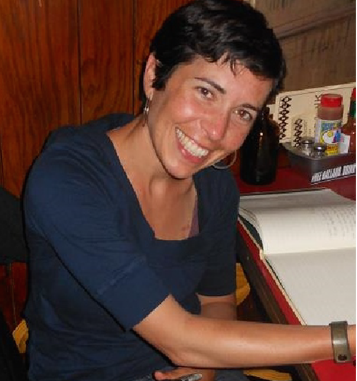
Tikvah
Tikvah Weiner.

In honor of Tikvah

Tikvah Weiner was beloved at UW, and during her time working at the Program on the Environment, she touched many with her warm personality and genuine care for others.

“She always had a smile on her face and her ebullience and personable manner helped defuse tension; she was driven to bring people together” shares Julia Parrish, who was director of Program on the Environment for part of the time Tikvah was the program’s graduate program adviser and then administrator.

When Tikvah’s health deteriorated with her breast cancer diagnosis, Julia and Landscape Architecture faculty member Ken Yocom, a former program advisory board member, worked to establish a gift fund in her honor. Tikvah loved gardens and expressed a desire to have a space for student use, in the urban environment, as a demonstration of sustainable practices. In this spirit, the learning space and garden will hold space for collaboration, contemplation and camaraderie.

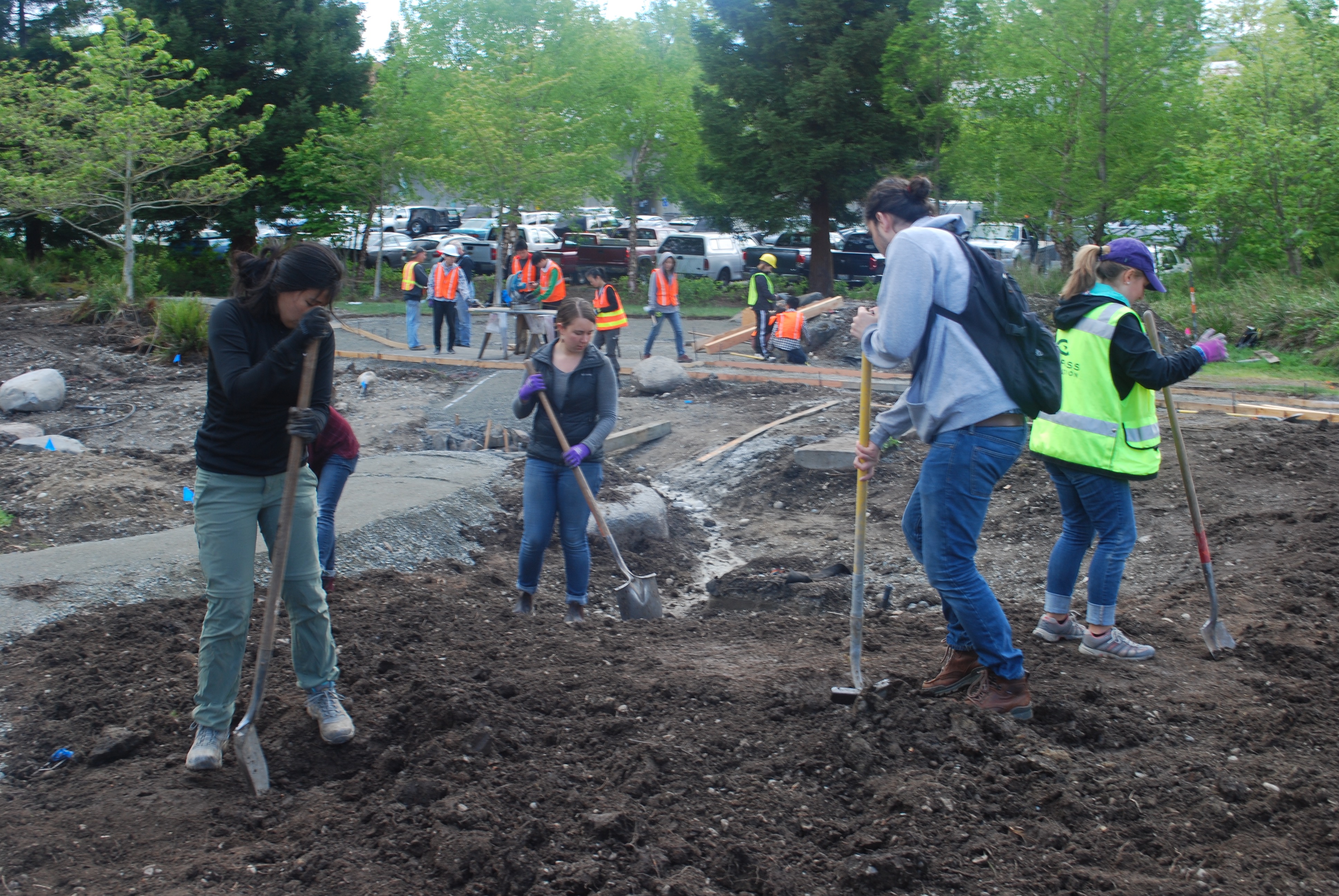
Students shoveling in the garden.
Students shoveling sections of the raingarden.

Collaborating to foster a living lab

The initial plans for the garden location had to be changed and along with students from Landscape Architecture and Program on the Environment, the advisory group mulled over options, quickly. Howard Nakase from UW Grounds suggested the northern part of the Fisheries Lawn, in part for its existing trees and habitat, and from there, the team re-envisioned the original models for the space and completed the project in mere weeks.

Through this interactive experience, students learned about the practicalities of augmenting the built environment—from adapting to planning modifications, applying construction and fabrication skills, to grappling with the incessant blackberry bush growth and the challenges of incorporating sustainable building elements that matched the project’s needs.

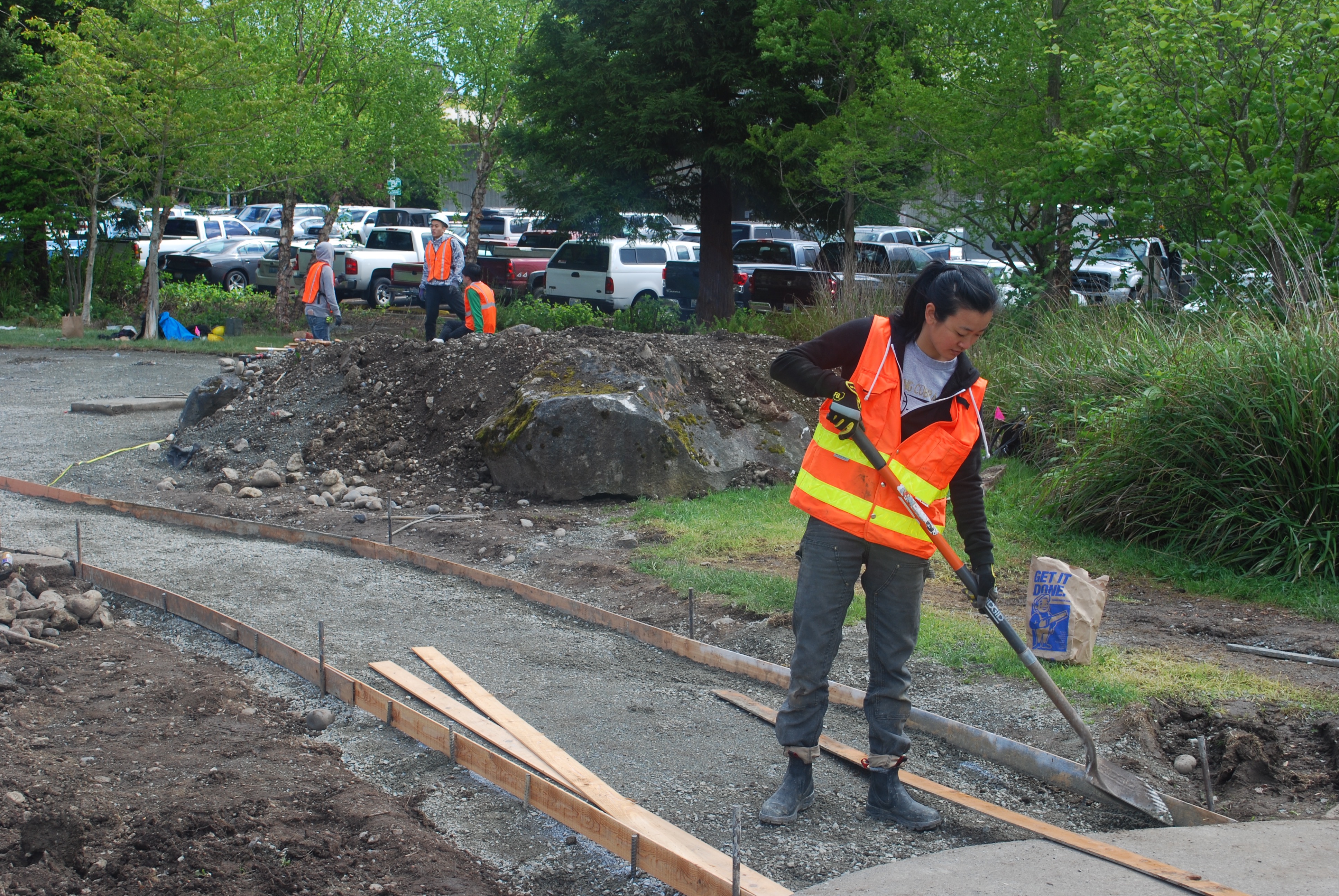
Tori Shao shoveling in the garden.
Tori Shao at work in the garden.

For Tori Shao, the student lead on the project and a Landscape Architecture major, the collaborative aspect was a highlight. “I had to learn how to speak in another language when translating the landscape jargon to students from the Program on the Environment,” mused Shao. “I really appreciated how we moved forward to work within the project parameters and how resilient we were in terms of the constraints we had! Learning conversations and flexibility were key.”

Sustainability in action

This project, in large part funded by a Campus Sustainability Fund (CSF), is one of the first of its kind in terms of building a highly visible and usable outdoor space on the UW campus that takes into consideration the complex elements of a changing physical landscape, restoration of an urban area, hydroecology and nurturing of native plants.

“The collaboration and creativity of all made this project possible,” says Kyle McDermott, who was the CSF liaison and helped with coordination and facilitation. “CSF’s mission is to drive change on campus and empower students to use UW as a living lab. This project embodied these goals.”

Mobile wood chairs, built by the Design Build Landscape Architecture students.

Creating a space with sustainable elements meant many things. Tori Shao shared that the design team thought through everything from the materials, to the use of space as an educational one, to the potential for restoring the natural habitat.

The brightly colored steel and wood chairs with flowing, organic form were designed and fabricated by students with mobility in mind. The five benches around the garden were built from slabs of a felled Sequoia tree that had been struck by lightning on UW’s campus. The student team was enthusiastic to have the CSF-funded Salvage Wood program as a resource when selecting materials and re-envisioning what sustainability meant in the context of the project.

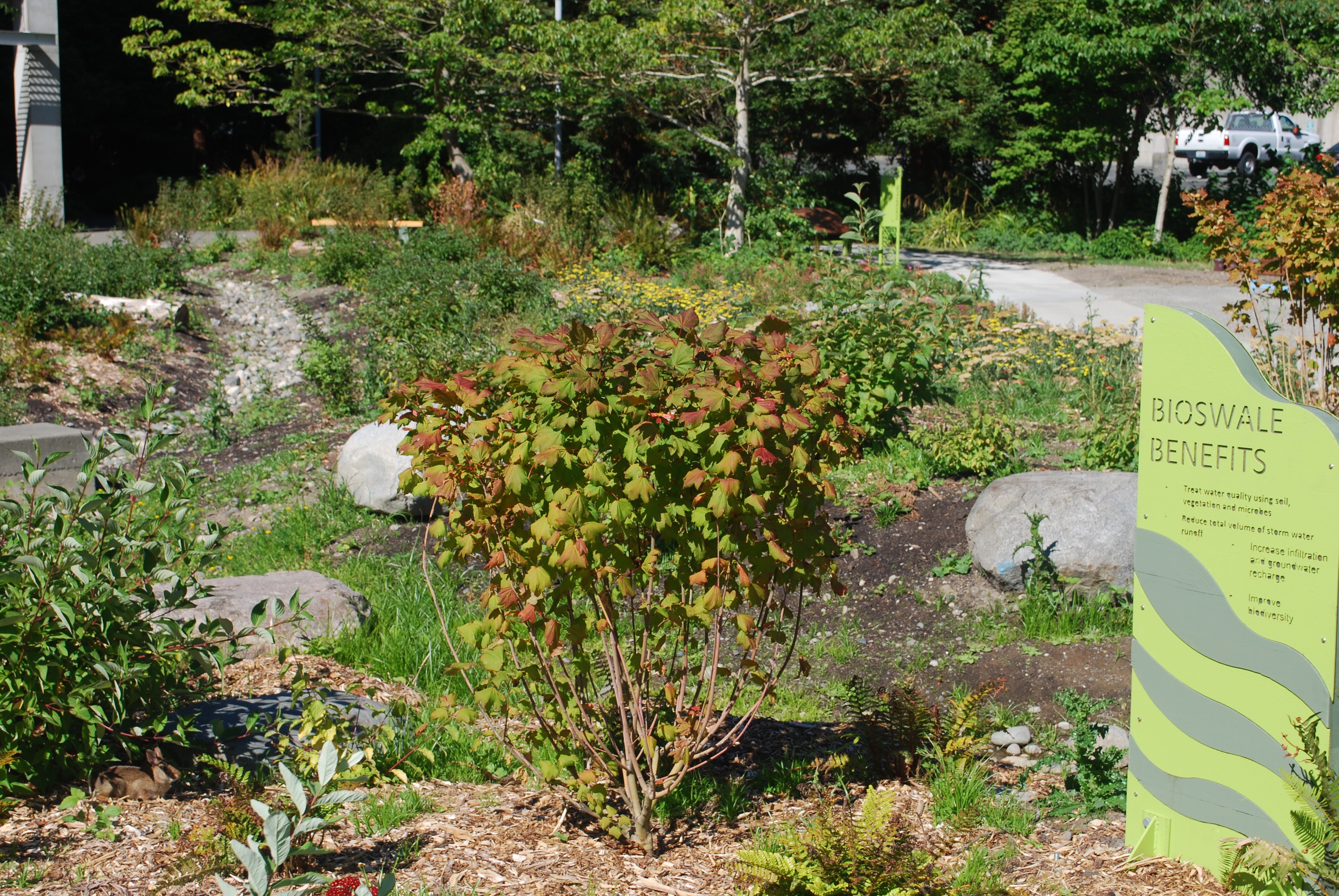
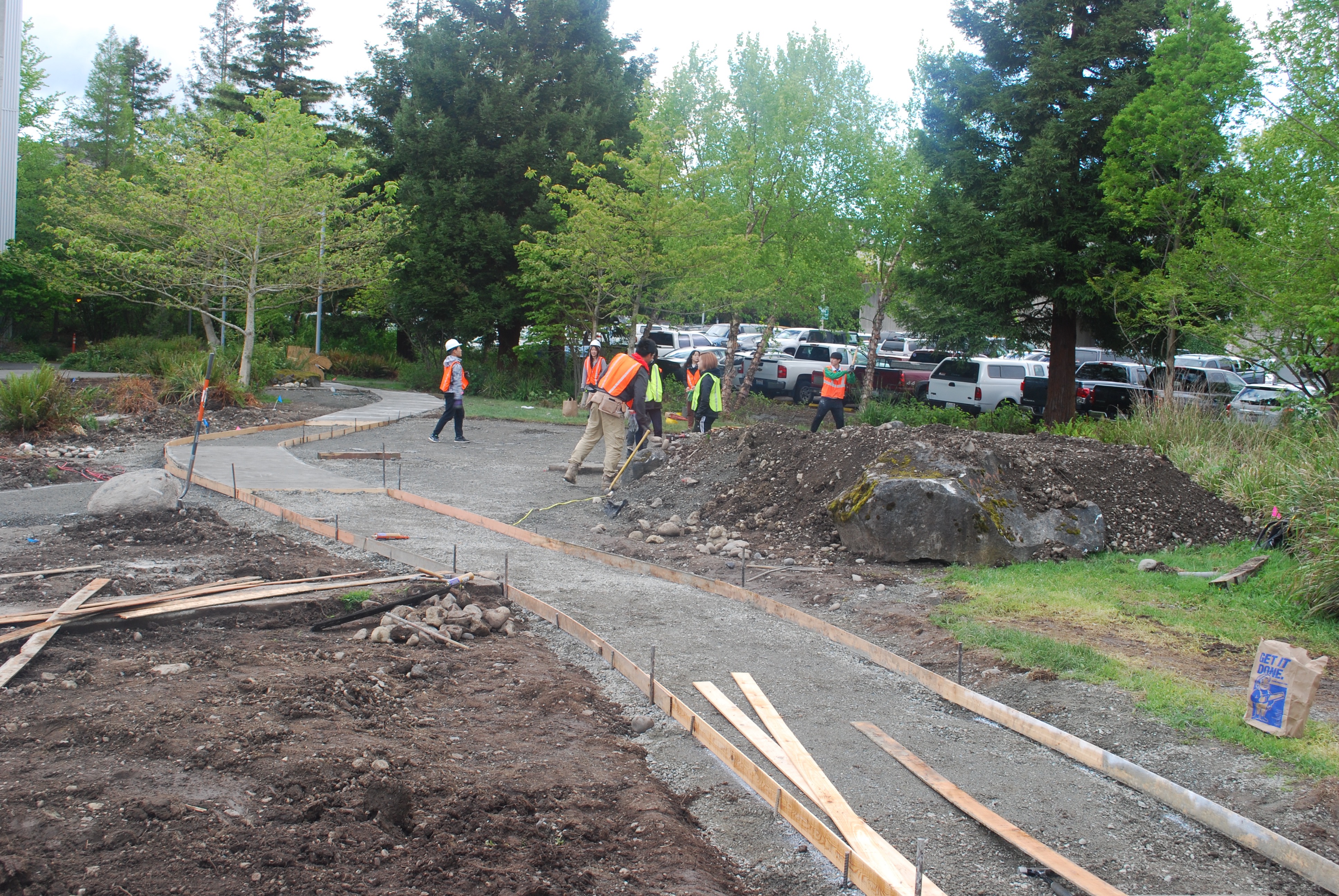
Program on the Environment students learned about bioswale, garden management and incorporated elements of sustainability and eco-psychology. Together, the students contributed to on-site work, selecting and planting Bunny in the gardennative species, weeding, paving pathways and building an ADA accessible space, including interpretive signage around the rain garden, home to native and pollinator plants, birds and the occasional bunny.

For Madeline Schroeder, the spirit in which the space was created will motivate the longer-term care of the garden. “Even in the future, when students look upon this garden and ask how the snags got there or what the purpose of the rain garden is, Tikvah will still be inspiring thought and wisdom. It is for this reason, the ability to contribute to a learning experience unbound by time by an inspiring and well-missed individual, that I decided to take part in this independent study.”

The Sustainable Learning Space is meant for everyone on campus, and stands as an example of a team effort to encourage active learning spaces on campus, to demonstrate the creative work of students, and to provide a contemplative, beautiful space to remember Tikvah.

“This project really captures the very essence of Tikvah: natural, learning-oriented, and beautiful. She cared so much about our students and community, and would be thrilled about the students’ involvement in its design and creation.” – Clare Ryan, former director of Program on the Environment

The project team posing for a group photo.
A large part of the project’s team, posing at the end of quarter to celebrate the completion of the project.


Update: See photos taken during the commemoration of the garden space.