
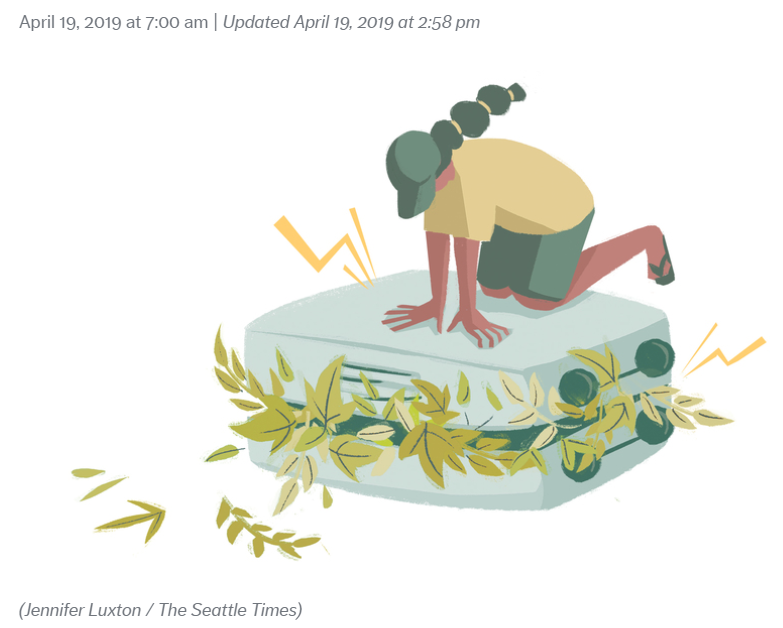
PoE Associate Director, Dr. Kristi Straus on Carbon Offsetting and Travel in The Seattle Times.
Bill McKibben Discusses Falter: May 2 7:30pm Kane 120
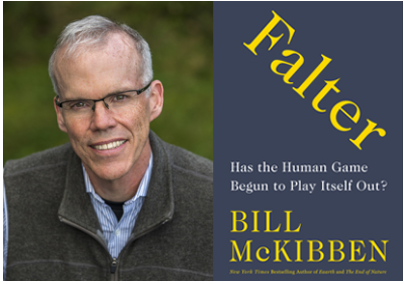
McKibben’s earlier work offered prescient warnings about climate change. But in his newest book he suggests the danger is broader than that. Join us for a thought-provoking discussion about the future.
ABOUT THE BOOK:
Thirty years ago Bill McKibben offered one of the earliest warnings about climate change. Now he broadens the warning: the entire human game, he suggests, has begun to play itself out.
Bill McKibben’s groundbreaking book The End of Nature — issued in dozens of languages and long regarded as a classic — was the first book to alert us to global warming. But the danger is broader than that: even as climate change shrinks the space where our civilization can exist, new technologies like artificial intelligence and robotics threaten to bleach away the variety of human experience.
Falter tells the story of these converging trends and of the ideological fervor that keeps us from bringing them under control. And then, drawing on McKibben’s experience in building 350.org, the first truly global citizens movement to combat climate change, it offers some possible ways out of the trap. We’re at a bleak moment in human history — and we’ll either confront that bleakness or watch the civilization our forebears built slip away.
Falter is a powerful and sobering call to arms, to save not only our planet but also our humanity.
ABOUT THE AUTHOR:
Bill McKibben is a founder of the environmental organization 350.org and was among the first to have warned of the dangers of global warming. He is the author of the bestsellers The End of Nature, Eaarth, and Deep Economy. He is the Schumann Distinguished Scholar in Environmental Studies at Middlebury College and the winner of the Gandhi Prize, the Thomas Merton Prize, and the Right Livelihood Prize. He lives in Vermont.
This event is presented in partnership with the University of Washington Program on the Environment, and is supported by The Seattle Public Library Foundation, author series sponsor Gary Kunis, and media sponsor The Seattle Times, and presented in partnership with Elliott Bay Book Company. Books will be available for purchase at the event.
PoE Lecturer Tim Billo Makes News in Work with Sword Fern Die-Off
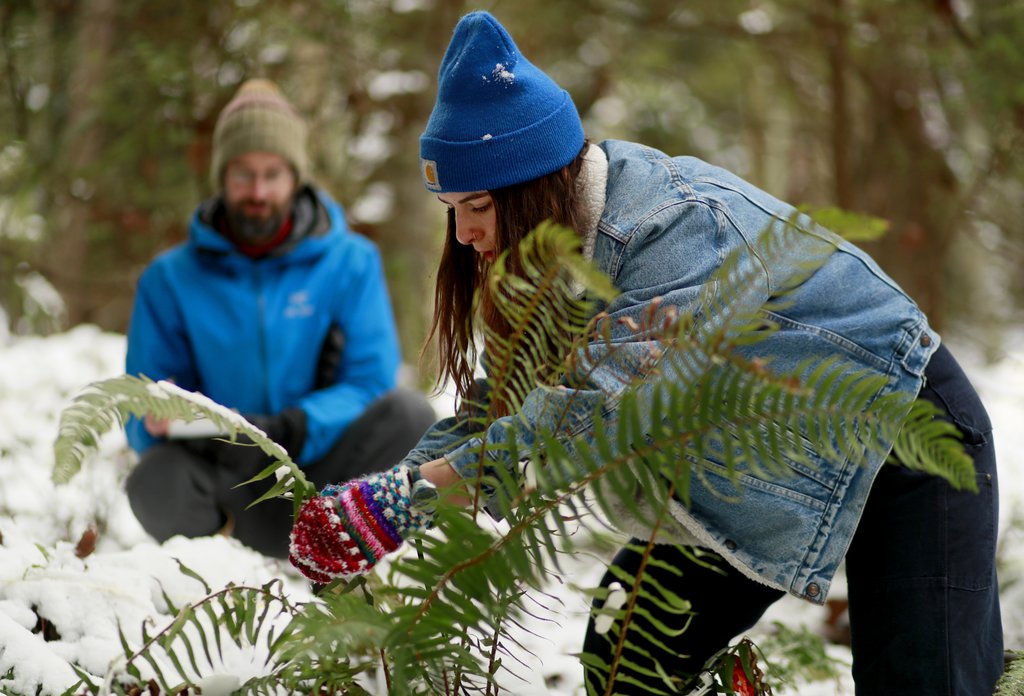
Tim Billo, instructor of our Natural History of the Puget Sound Region course, practices what he preaches. He uses his research into the natural history of our local sword ferns as a way of introducing undergraduates to research, demonstrating to them that they can make important contributions to natural history, as well as to helping to solve pressing ecological issues. Indeed, as the article suggests, this research would not be possible without the collaborative efforts of many concerned citizens, including our students who have played crucial roles over the past four years.
PoE Spring Fling: April 4, 4-6pm
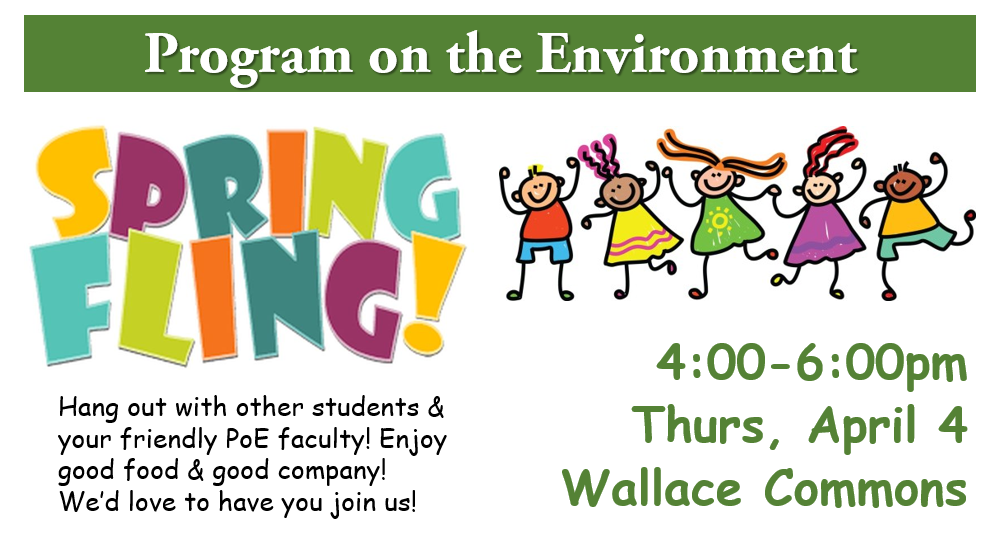 The annual PoE Spring Fling is scheduled for Thursday, April 4, from 4-6pm. Students are invited to join PoE faculty for food, fun and community building. Pizza and salad will be provided and there will be plenty of opportunities to get to hang out with friends and meet new people! Please join in the fun! Send your questions to the PoE Advisor, Ana Wieman at enviradv@uw.edu
Spring 2019 Capstone Symposium: May 29
The Program on the Environment will host the Spring 2019 Capstone Symposium on Wednesday, May 29, in the Fishery Science Building. All are welcome to attend and support students as they present on the culmination of their hard work over three quarters.
The Capstone Course Series is a highlight for many students, and serves to catapult some into their first jobs or event their dream careers. Through internships, research, and social media training, students come out of the experience well equipped to communicate about the problem they sought to solve, and to tie their academic learning with specific research questions.
This event is open to the public, and we encourage students interested in learning about the Capstone, as well as members of the community, to join us. There will be beverages and snacks served. For those who can’t attend in person, please follow the event on Twitter #POEcap.
**Abstracts and additional information about each project can be found in here: Word/PDF.
Spring 2019 Symposium Schedule
Wednesday May 29
4:30PM – Opening remarks/housekeeping
Session A – Poster I: Agriculture & Food systems, Green Business & Sustainability, Natural Science & Conservation Policy & Regulation
4:40PM – 5:35PM
Maddy Carr – Greening Business: Systematic Ordering Strategies for Sustainable Purchasing
Isabella Castro – Enforcing Environmental Laws through Collaboration
Olivia Clark – Urban Forestry and Equity in the Puget Sound Region
Brenda Cueva – City Fruit Trees: Combating Food Insecurity
Brandy Do – Alaska Native Villages’ Solid Waste Burden and Its Ties to Environmental Injustice
Jon Akira Doyle – Lawn Care 101: Grassroots Mobilization and Political Polarization
Byambasuren Enkhee – Obstacles to Practicing Regenerative Agriculture
John Ericksen – The Keys to Improving Sustainable Choice’s Surveys
Erin Filley – Farmland Preservation in the U.S.: Public Perceptions and Communication Strategy
Jia Hui Huang – Find Out the Pacific Ocean Perch Species Early Growth Rate by Morphometric Analysis and Calculation
Sally Kamae – The Soundscape of Military Aircraft on the Olympic Peninsula
Eunice Lee – Sustainable Oil Production: Can It Be Done?
Winslow S. Lewis – Clearing the Air: Indoor Air Quality in Alaska Native Villages
Elijah Maesner – How Are College Athletics Saving the Environment?
Anna McKee – Raptor Rehabilitation Demographics: Human Impacts in Western Washington
Russell Monroe – Applying Environmental Discourse to Disaster Mitigation Strategies
Anneliese Smyth – Improving Sustainability Efforts in Universities across the United States: Developing Better Procurement Practices
Meghan Strom – How does Technology Impact our Connection with Nature?
Ariana Winkler – Barking Up the Wrong Trail: How Trail Users and their Dogs Impact Wildlife
Meghan Wirth – The Toxics Release Inventory: Mining in Region 10
Session B – Lightning Talks: Capstone, Here & Away
5:45PM – Introduction
Jane Green – Barriers to Composting Correctly: A Case Study of Seattle Schools
Alec Egurrola – Is Discovery Park Actually Public?
Kathleen Peterson – Promoting Alternative Transportation and Environmental Awareness to Encourage Sustainable Commuting Habits
Sam Kleinfinger – Ocean Acidification and Native Tribes: Sharing Stories from the Olympic Coast
Delgerzaya Delgerjargal – How to Protect Blue Whales from Ship Strikes
Rachel Fricke – A Bobber’s Perspective on Angler-Driven Vectors of Invasive Species Transmission
Tiara Adler – Coastal Resilience: Shoreline Management and Sea Level Rise in Andalucía and the Puget Sound
Nick Hanson – Water in Wolaita: GIS Evaluated as a Tool for Informed Decision Making in Sodo, Ethiopia
Jacob Huskey – Birds. Bags. Bioinspiration: What We Do with What We Know About Nature
Emily Menz – A New Approach for Valuing Biodiversity: Lessons from the Peruvian Amazon
Session C – Poster II: Education & Outreach
7:10PM – 8:00PM
Lauren Campbell – From Stock Health to Public Health – Revitalizing West Coast Groundfish with a Health-Focused Marketing Campaign
Gabriella Chilczuk – Three Strategies Towards Diversifying Climate Engagement
Victoria Choi – Are We Taking Full Advantage of our Sustainable Campus?
Saulyman Corr – Service-Learning and Teachers Goals, Can We Meet the Needs?
Eden Cypher – Collaboration is Key: Steps for Increasing Diversity within the Environmental Movement
David Dryburgh – Benefits of Spatial Data: Discovery Park and Accessible GIS Information
Erika Gersten – Putting the “Fiddle” In “Fiddleheads:” Music Education in an Outdoor Preschool
Truc Ho – Trash Free Water: How Community can be Involved in Policy Management and Scientific Research?
Rori Kirkpatrick – How to Teach and Engage the Local Community via Social Media- Supporting Local Agriculture
Pooja Kumar – Environmental Outreach and Community Engagement: What Does it Take to Spur Climate Action in King County?
Lorraine Lee – Evaluating Single-Time Environmental Outreach Program and Their Effects in Stem Education
Arendje Louter – Signs of the Times: How Technology Can Improve Environmental Awareness
Jessica Murphy – Climate Communications: How Can We Reach Goals More Effectively?
Gina Pak – Utilizing Technology for Interpretive Material in Urban Parks: Opportunities and Barriers
Ankush Puri – Protect Your Pipes: Flush Only Toilet Paper
Angelina Quilici – Knowledge Surrounding Salmon in the Lake Washington Watershed
Jenny Renee – What Considerations Are Essential in Developing an Effective Educational Program for Small, Isolated, Indigenous Communities in Alaska?
Madeline Schroeder – What Does It Take To Recycle A Box?
Elizabeth Watt – Watch Your Step: How Human Behavior Contributes To Loss of Forest Habitat
May Xie – Improving Volunteer Retention Rates
Yichen Yao – Healing Through Learning: The Effect of Gardening Courses
8:00pm – Event concludes. Students host an after-symposium celebration on the Fisheries Building lawn.
The Program on the Environment welcomes our new director, Dr. Gary Handwerk!
The UW College of the Environment is pleased to announce that Gary Handwerk has been named director of the Program on the Environment (PoE), effective March 16, 2019.
Gary is a scholar and teacher of the environmental humanities, working in the branch of literary and cultural studies known as “ecocriticism,” which aims to understand the effects of representations of nature. He has extensive experience in departmental administration, serving as chair of both Comparative Literature, and of English, over the last two decades. Gary’s ability to bring faculty from diverse programs and disciplines together is evident in his leadership role in creating the environmental humanities (EnviroHum) group at the UW, his participation as a founding faculty member in the newly created academic unit Comparative History of Ideas (CHiD), his leadership of the Study Abroad program in Paris, and his long involvement with the Program on the Environment including serving on the newly reconstituted Faculty Advisory Board.
The College also wants to thank Kristi Straus for her exceptional service as acting director. “Kristi has been a passionate and tireless advocate for Program on the Environment.” Lisa Graumlich, dean and Mary Laird Wood Professor at the College of the Environment said. “I am particularly appreciative of her ability to skillfully and positively bring together exceptional faculty from across the college and the campus to serve on the PoE Faculty Advisory Board, and to guide the unit forward in discussions of how the goals and structure of the unit should support each other.”
Finally, thanks are also due to the advisory search committee for their energy, enthusiasm and thoughtfulness, including Chris Anderson (search committee chair and associate professor, School of Aquatic and Fishery Sciences), Juliet Crider (associate professor, Department of Earth and Space Sciences), P. Sean McDonald (lecturer, Program on the Environment), and Richard Watts (associate professor and chair, Department of French & Italian Studies.)
“I want to take this opportunity to thank students, staff and faculty from the unit and more broadly throughout the college who participated in the search process.” Graumlich said. “In particular, I would like to publicly acknowledge the work of the Advisory Search Committee. This service to the college requires care, patience and commitment, and when well done—as is certainly the case here—results in the recruitment of an exceptional colleague into our midst.”
Please join us in welcoming Gary to the College!
Congratulations to our 2018-2019 Environmental Leadership Scholars!
Congratulations to Environmental Studies majors Tiara Adler and Zaya Delgerjargal, our 2018-2019 Environmental Leadership Scholarship recipients!
Program on the Environment, with support from generous donors, awards scholarships to two students each year who demonstrate a passion for environmental studies, integrative thought and action in their academics and activities, and a vision of how they hope to make a positive difference in the world.
Both Tiara and Zaya have shared their gratitude for the scholarship and the support they receive as Environmental Studies majors.
Tiara
This past summer, Tiara was a planning intern for the City of Bainbridge Island and developed a municipal monitoring program for shoreline development permits. She is spending Fall quarter in Cadiz, Spain, immersed in Spanish language learning and continuing her Capstone research regarding global perspectives on sea level rise, and the role of urban and ecological planning.
 “All I can express is the utmost gratitude for this award! Program on the Environment has encouraged me from day one to discover and act upon my passions. This award is going towards my tuition at the University of Washington.”
Tiara has credited several experiences at UW that have shaped her growth as a leader including: co-managing the ASUW Student Food Cooperative, being an orientation leader with First Year Programs, teaching as a peer TA, and being active within her Program on the Environment community.
“My experiences at the University of Washington have humbled me, and showed me that being a leader is so much more than a title. Thank you to everyone that has supported me, challenged me, and encouraged me to dream bigger. I am overwhelmed and grateful for this opportunity.”
Zaya
Growing up in a less privileged community helped Zaya better understand the environmental challenges less fortunate and under-represented social groups face. Having seen unethical mining business practices in Mongolia, her home country, Zaya chose to direct her Capstone Internship to address these practices.
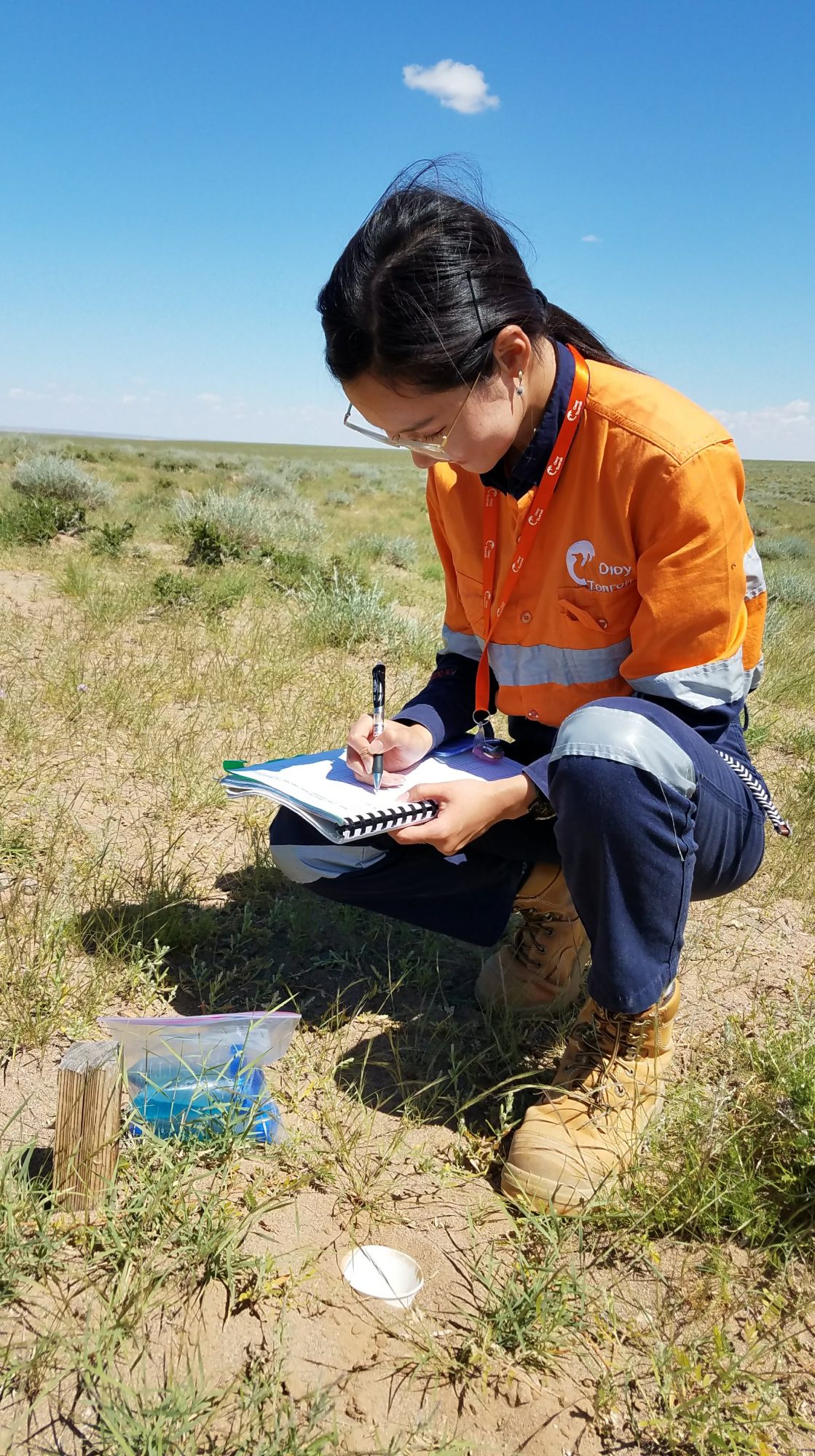 “Last summer, I interned with the environmental team in Oyu Tolgoi, one of the world’s largest copper mining companies. Seeing environmentally and socially responsible actions the company has been taking, I am more hopeful that businesses and locals can collaborate for the good of the society and the environment.”
Besides working two jobs as a Conservation and Facilities assistant, Zaya is also working as a student research assistant for an air pollution project in the School of Engineering and conducting an independent study on the Mongolian ground jay, an endangered bird species. She is pursuing majors in Environmental Studies and Economics, and wants to work in the environmental consulting sector and help businesses grow more sustainably.
“The Environmental Leadership Scholarship is one source of generous financial support that has enabled me to work far less than before, so I could spend much more time doing research. More importantly, it was one great word of encouragement. Now I feel more encouraged than ever to continue what I initially really wanted without any self-doubt. I can do more!”
Combining science and art to shift our thinking and spur action in a changing world
(Story originally appeared on EarthLab website)

Tyler Ung
We’re living in the Anthropocene, or the epoch in which humans are—for the first time—the dominant driver of global change related to climate and the environment. As polar ice melts, sea levels rise, and storm and wildfire seasons get longer and more intense, climate projections suggest the Earth will be several degrees warmer by 2100. Although most Americans say climate change is an important topic, research shows fewer than half see it talked about in the media and just one in five discuss it with their peers. Science communication, or moving science outside the walls of academia, isn’t easy—but it’s imperative. Tyler Ung wants to play a role in that imperative.
Tyler is a 2018 graduate of the University of Washington’s Program on the Environment, a bachelor of arts offered through the College of the Environment.
He’s an artist and an academic—an atypical combination that may become more less-so as institutions, organizations, and individuals see the value of communicating science through both academic and cultural lenses. Tyler believes people practicing both disciplines within their traditional silos falls short in reaching the public, especially when it comes to contextualizing the precarious situations we face.
“In science, we’re taught to act inhuman to remain objective. On the other hand, art has been a method of communication since our ancestors could draw on rocks, but a common response to art is, ‘I don’t get it,” he said. “If we’ve got senators throwing snowballs, we know we have a gap in communicating science into public discourse.”
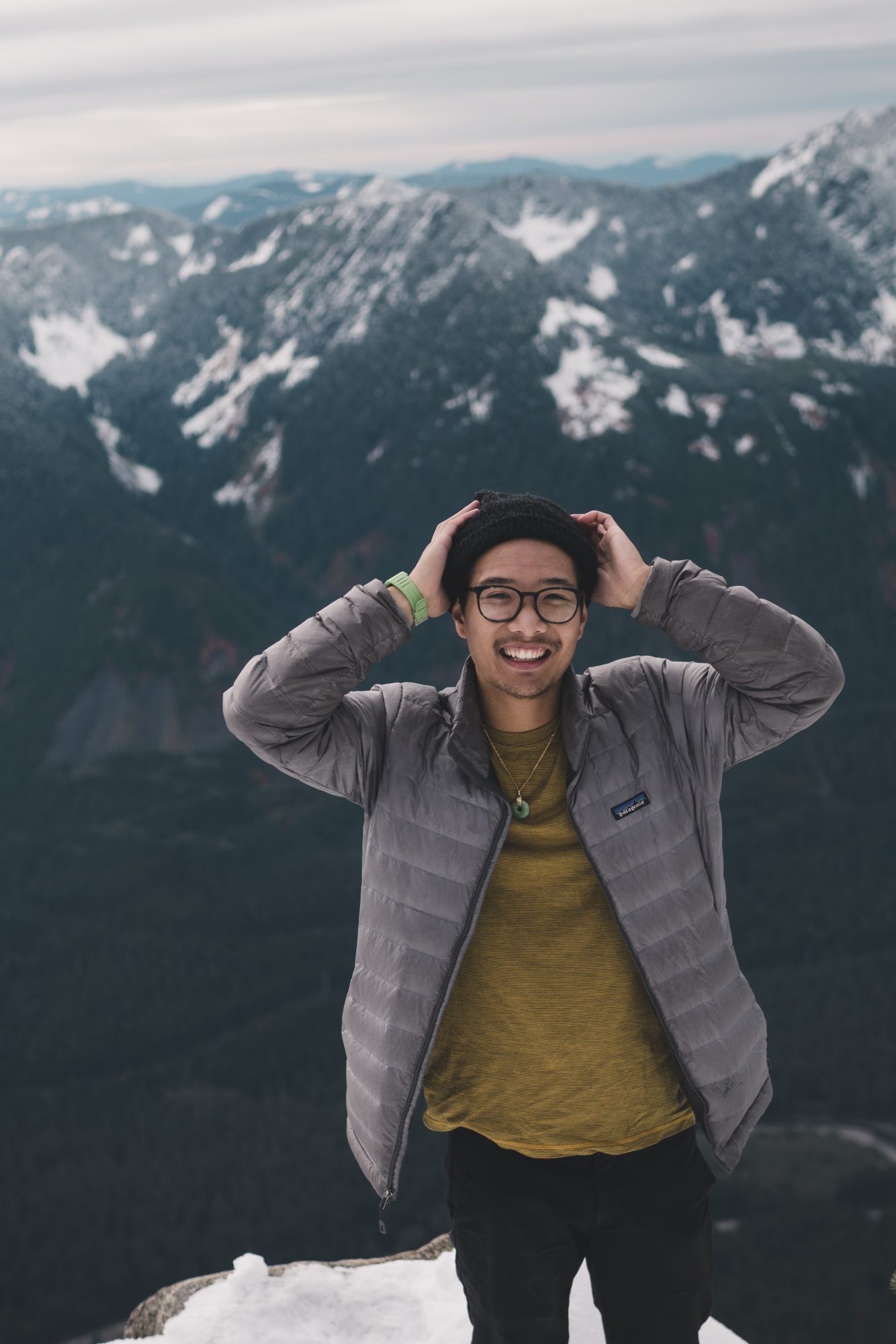
Tyler Ung
As an intern at UW’s Center for Creative Conservation, now fully integrated in EarthLab, Tyler developed a senior project focusing on the budding “sci-art” movement, a concept that bridges the science communication gap through creative expression. Working with Sara Jo Breslow, an environmental anthropologist and the Center’s program manager, he wanted to know if sci-art could truly increase environmental awareness, where and how it’s currently being employed, and to try his hand at creating sci-art.
Tyler developed three categories that sci-art efforts commonly incorporate to appeal to individuals’ hearts and minds. Based on Kathleen Dean Moore’s book Moral Ground, he looked at sci-art projects through anthro-centric, bio-centric, and human virtue-oriented lenses. That is, sci-art often speaks to people by appealing to their sense of moral obligation to future generations of humans, the Earth itself and all its creatures and/or compassion and preservation for oneself.
Digging deeper, he wanted to see sci-art efforts and opportunities around the globe. In addition to examining the Pacific Northwest, Tyler analyzed sci-art’s prevalence through two study abroad experiences offered through the University of Washington. He traveled to China with Program on the Environment Lecturer Kristi Straus, as part of her “international flipped classroom” partnership with Tsinghua University in Beijing, as well as spent time in Bangalore, India with UW’s Grand Challenges Impact Lab.
“China, India, and the US. heavily impact the trajectory towards a more livable future. They hold records as one of the biggest emitters, highest in urban population growth and most wasteful per capita,” he said. “This inspired me to examine and connect these three cities and countries.”
Combining science and art to shift our thinking and spur action in a changing world
Crunching data to trace the impact of recreational fishing on the movement of aquatic invasive species
Environmental Studies majors take part in a unique 3-quarter Capstone experience combining professional development, a built-in internship (locally or abroad) and a public presentation tying in their academic research with their practical on-the-job work. Students gain valuable hands-on experience exploring potential career paths and they build communications, research and analytic skills that serve them well beyond their time at college.
Read more about what the student experience is within our Capstone, in this fourth post in our Student Capstone Q&A Series.
Rachel Fricke
Capstone Study Focus: Using fishing technology to trace angler movement as a vector for invasive species
Capstone Organization: Olden Freshwater Ecology and Conservation Lab
UW Faculty Mentor: Dr. Julian Olden
Why did you choose this internship?
My academic interests encompass anthropogenic interactions with freshwater resources, and I knew going into my capstone that I wanted to work somewhere within this realm. While a student in Dr. Olden’s Aquatic Invasion Ecology (FISH 423) course last Fall I met with him to discuss potential projects, and at the time he was looking for a student to tackle a collaborative study with ReelSonar, the makers of iBobber – a sonar-enabled bobber with over 3 million records of fishing activity around the globe. I was excited by the dataset and its applications within aquatic ecology, and ultimately chose to pursue this internship because I knew the work would be both personally challenging and rewarding.
What environmental challenges are you addressing? Why is it important?
Recreational fishing and boating serve as pathways for the movement of aquatic invasive species into new waterbodies, and curbing the spread of noxious invaders through these vectors is an ongoing management challenge. Using data generated by iBobbers, I am characterizing fished ecosystems and integrating invasive species’ distributions with angler (fishing with a line and hook) movement patterns across the continental U.S. My study carries important implications for predicting and preventing future transmission of aquatic invasive species via recreational angling.
What are the goals of this internship and what are your expected deliverables?
Through my study I am developing my competency in quantitative analysis and science communication. To do so, I’ve synthesized research method and writing skills acquired in my Environmental Studies and Fisheries classes. My final expected deliverable is a publication-quality manuscript which I plan to submit to a peer-reviewed journal.

Photo courtesy Thiago Couto
What does a day in the life of your internship look like?
I typically arrive at our lab office in UW’s School of Aquatic and Fishery Sciences around 7 or 8 am, make a pot of coffee, and then pull up my to-do list. My work differs from day-to-day, but I usually spend time using ArcGIS and/or R to analyze data, searching and reading relevant literature, and drafting our manuscript.
I’ve also been working as a field technician in the lab over the summer, collecting samples for stable isotope analysis at high alpine lakes in the Cascades. On field days we’d leave from base camp at 6 am and backpack (sometimes bushwhack) a few miles to our lake for the day, where we sampled phytoplankton, zooplankton, fish, invertebrates, and plants using ultralight pack rafts.
What skills have you learned throughout this internship?
My proficiency in ArcGIS, R, and Python has increased by leaps and bounds through this study. I had some experience with these programs prior to starting my work, but using them to analyze my own data rather than simply completing a class assignment has substantially increased my understanding of their capabilities. I’ve also learned that a large part of conducting scientific research is simply deciding how to interpret findings and their broader relevance, both in narrative and visual form.
There is rarely one “right” way to execute a study.
I’ve often wrestled with decision-making, but while carrying out my work I’ve had to justify the choices I make to my mentors, which has in turn bolstered my confidence as a researcher.
What’s the most memorable moment of this internship so far?
This past May I had the opportunity to share some my initial findings as a talk at the Society for Freshwater Science Annual Meeting in Detroit, MI. While there, I received constructive feedback from professionals in the field, met a number of ecologists whose work I have long admired, and learned about ongoing projects in a range of freshwater-related disciplines. The most memorable moment was responding to audience questions after I gave my presentation – their interest reaffirmed my investment of time and energy into my work.
What are your career aspirations once you graduate?
My immediate plans are to pursue graduate studies in aquatic ecology, though I’m also exploring research fellowship opportunities overseas. In the long-term, I hope to continue advancing freshwater conservation as a university professor and allocate my time toward both teaching and research. Working in the Olden Lab has been one of the most meaningful learning experiences in my time as an undergraduate, and I would love to start my own lab one day and pay forward the support I’ve benefitted from as a young scientist.